
Understanding Prompt Engineering
Prompt engineering is a critical skill in the age of artificial intelligence. As AI systems, particularly language models like ChatGPT, become more prevalent, the ability to craft effective prompts can significantly influence the quality of the responses you receive. But what exactly does prompt engineering entail? It’s the art and science of formulating inputs that guide AI to produce the desired output. Whether you’re looking to generate creative content, solve complex queries, or even automate mundane tasks, your prompts will shape the interaction.
Think of prompt engineering as a dialogue. Just like you wouldn’t expect a fruitful conversation by asking vague or poorly structured questions, AI models also require clarity and context. When you learn the nuances of crafting prompts, you’ll find that you can elicit more relevant, accurate, and engaging responses. This is especially crucial for beginners who might not yet understand the subtleties involved. By mastering these skills early on, you set the foundation for more complex interactions with AI down the line.
Key Principles of Prompt Engineering
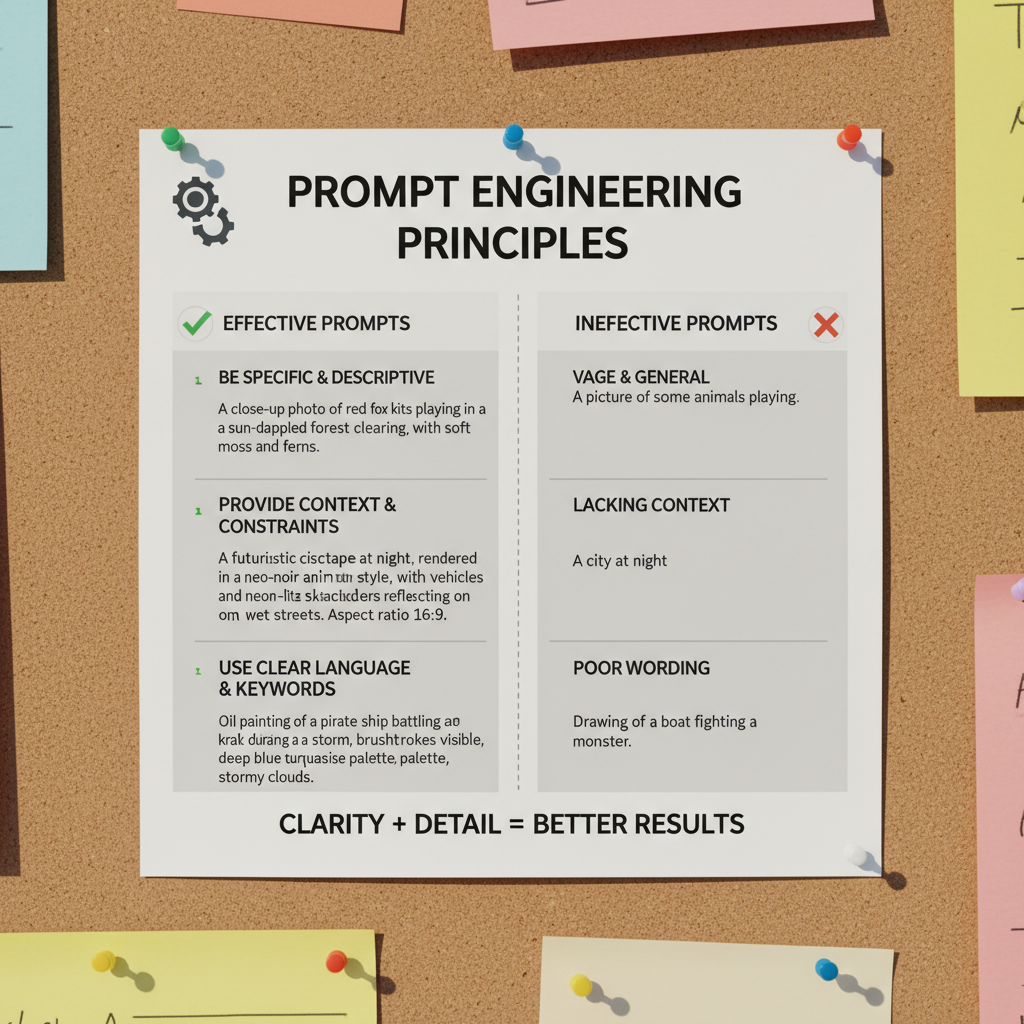
Before diving into specific tips, it’s essential to grasp the key principles of effective prompt engineering. Firstly, specificity is paramount. The more detailed and clear your prompt, the better the AI can understand and respond to your request. For instance, instead of asking, “Tell me about space,” you might ask, “What are the latest developments in space tourism for 2026?” This shift not only focuses the AI’s response but also makes it more relevant to your needs.
Secondly, consider the context. Providing background information or parameters helps the AI tailor its responses. If you’re seeking advice on prompt engineering, letting the AI know your experience level or the specific application can produce far better results. Lastly, practice iterative refinement. Don’t hesitate to tweak your prompts based on the responses you receive. If the output isn’t quite what you expected, adjust your wording or add more context and try again. This back-and-forth can lead to increasingly refined and useful outputs.
Tips for Crafting Effective Prompts
Now that you understand the fundamentals, let’s dive into actionable prompt engineering tips for beginners. Start with open-ended questions to encourage expansive responses. Phrasing your prompts in a way that invites elaboration can yield richer information. For example, rather than asking, “Is AI useful?” try “In what ways can AI be beneficial in everyday life?” This encourages the AI to explore various angles and provide a more comprehensive answer.
Use clear and concise language. Avoid jargon unless it’s necessary for the context. Remember, the AI models are trained on vast datasets, but they don’t possess human-like understanding of nuance unless prompted correctly. Also, consider the format of the response you want. If you’re looking for a list, specify that in your prompt. For instance, saying, “List five ways to improve productivity using AI” clearly communicates your expectation.
Experiment with Different Prompt Structures
Exploration is key in prompt engineering. Don’t shy away from experimenting with various prompt structures. You can ask questions, request lists, or even demand creative outputs. Each format might yield different styles of responses. For example, using a question format like “What are the benefits of using AI in education?” might produce a different depth of information compared to a directive format like “Explain the benefits of using AI in education.”
Moreover, consider using examples in your prompts. If you want the AI to generate a story or a specific style of writing, providing an example can serve as an effective guide. For instance, you could say, “Write a story in the style of Edgar Allan Poe about a haunted house.” This directs the AI and improves the likelihood of receiving a response that aligns with your expectations. Exciting Space Tourism News 2026: What You Should Know

Utilize Contextual Cues
When you’re crafting prompts, think about the context you’re providing. Contextual cues can greatly enhance the relevance and accuracy of the AI’s response. For instance, if you’re discussing technology, including the latest trends or specific technologies can focus the AI’s output. Instead of simply asking about “AI,” you might ask, “What are the implications of AI in healthcare as of 2026?” This specificity guides the AI to produce a more targeted response.
Additionally, if you’re working on a project or specific task, provide background information to help the AI align its output with your needs. For example, if you’re writing a report on AI regulation, you might say, “Considering the recent developments in AI regulation in Australia, what are the potential challenges?” This approach not only gives context but also prompts the AI to consider recent trends and legislation.
Iterative Refinement of Prompts
One of the best practices in prompt engineering is iterative refinement. This process involves tweaking and adjusting your prompts based on the AI’s responses. If the output isn’t quite what you were aiming for, think critically about why that might be. Was your prompt too vague? Did you ask a question that was too broad? By analyzing responses, you can gradually improve your prompts.
Start by documenting the prompts you use and the corresponding outputs you receive. This can help you identify patterns in what works and what doesn’t. For example, if you consistently get vague answers from a certain type of question, rephrase it to be more specific or structured. Over time, you’ll develop a knack for what types of prompts yield the best results, enhancing your interaction with AI.
Common Mistakes to Avoid
Even seasoned prompt engineers make mistakes, so it’s crucial to learn from them. One common error is being too vague. A prompt like “Tell me something interesting” lacks direction and won’t yield useful information. Instead, specify what you find interesting, such as “What are the most surprising facts about AI technology?” This specificity ensures you get targeted insights.
Another mistake is failing to provide context. As previously mentioned, context can make a significant difference in the quality of the AI’s response. If you ask a question without setting the scene, you might receive an answer that misses the mark. Always aim to provide relevant background information or specify the field you’re interested in.
Resources and Tools for Beginners
For those just starting with prompt engineering, several resources can help you hone your skills. Online courses focused on AI and machine learning often include sections on effective prompt crafting. Websites like Coursera and edX offer valuable learning materials that can deepen your understanding. AI Regulation Australia 2026: What You Need to Know
Additionally, communities and forums where AI enthusiasts gather can be invaluable. Platforms like Reddit or specialized Discord servers often have sections dedicated to prompt engineering. Engaging with others can provide insights and ideas that you might not have considered. Lastly, consider using example prompts from reputable blogs or case studies, which can serve as inspiration for your creations.

Practical Exercises to Hone Your Skills
To become proficient in prompt engineering, practice is essential. Start by taking a simple topic and crafting various prompts around it. Experiment with different styles, contexts, and structures. After generating responses, analyze which prompts produced the best results and why. This exercise will help you understand the nuances of effective prompting.
Another useful exercise is to mimic existing prompts found in successful applications. Look at how seasoned users or developers phrase their prompts and try reworking them to fit your style. This not only boosts your creativity but also reinforces effective practices. Over time, you’ll develop a personal style that works for you.
FAQs
What is prompt engineering?
Prompt engineering involves crafting inputs for AI models to elicit specific and relevant outputs. It’s about asking the right questions and providing the right context.
How can I improve my prompts?
To improve your prompts, focus on specificity, provide context, and don’t hesitate to refine them based on the AI’s responses.
Are there tools for prompt engineering?
Yes, various online courses, forums, and AI platforms offer resources and examples for effective prompt crafting.
Can I use examples in my prompts?
Absolutely! Providing examples can guide the AI to produce responses that align more closely with your expectations.
What are common mistakes in prompt engineering?
Common mistakes include being too vague and failing to provide adequate context, both of which can lead to unsatisfactory responses from the AI.